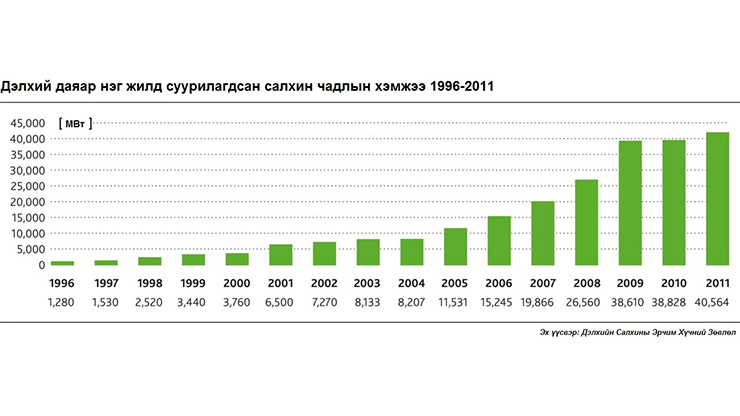
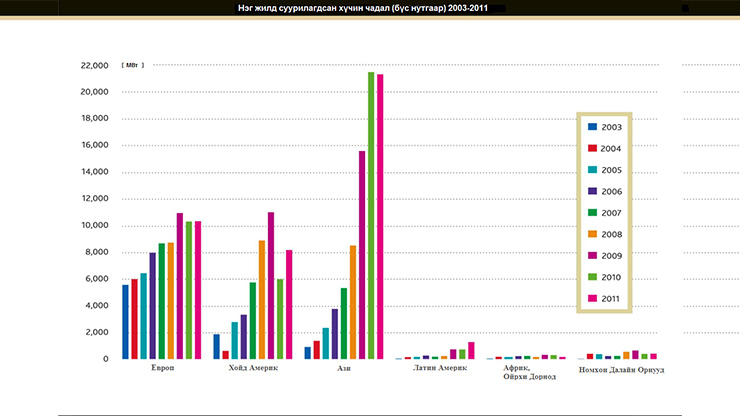
Countries such as China, America, and Germany are leading the world in terms of total installed capacity of wind energy. With current technical capabilities, wind power generation potential is 5 times greater than the current global energy production, and 40 times greater than the electricity demand. Due to the above factors such as climate change, environmental pollution, energy security, government support, and the reduction in the cost of building wind farms, wind energy has a major role to play in replacing traditional sources in meeting the world’s energy needs.
Wind energy extraction mechanism
The sun is the source of the wind. The heat from the sun causes irregular pockets of air, causing some parts of the air to become hotter and others colder. As a result, the hot air rises because it is lighter, and the cold air, because it is heavier, fills the space left by the hot air. Wind is created from this movement of air.
Wind turbines convert the kinetic energy of the wind into electrical energy. When the wind blows, it turns the turbine blades. Air flow turns the fan blades. The rotation of the shaft turns the shaft of the generator and produces electricity. A large number of wind turbines can be installed in a wind farm to generate large amounts of electricity.
Benefits of wind energy
- Wind is an inexhaustible free natural resource.
Wind energy is environmentally friendly as it produces no waste. Wind power plants do not emit pollutants, carbon dioxide and other greenhouse gases.
- Once installed, wind farms are very cost-effective. Low operating costs compared to other conventional power plants.
Wind power plants have a high efficiency in generating electricity.
Unlike coal and oil, wind energy is not affected by inflation.
- Wind energy will reduce the country’s dependence on coal.
The land on which the wind park is built can be used for grazing, agriculture and other purposes.