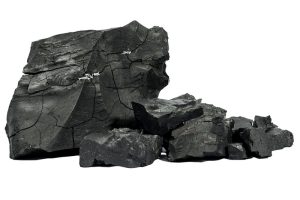
As the main source of urban air pollution, coal has created a narrow perception among the public that it is harmful and dangerous. People generally know that coal is used to produce high temperatures for steel smelting and is exported. However, Mongolians are largely unaware that coal is also widely used for health purposes, automobile fuel, gas fuel, and the production of construction materials.
Nevertheless, if coal is not used scientifically, today’s desire for warmth will not be satisfied, emphasized B. Nyamtaishir, Deputy Chairman of the National Committee for Industrialization.
B. Nyamtaishir, Chairman of the Policy Council and founder of “Mongolian Gold MAC” LLC, has been actively working and making major investments in the economic circulation of coal for more than 20 years. The company’s latest research has shown that the coal mined in Mongolia can not only be deeply processed using clean coal technology, but also exported at a high price. Specifically, coal from the Aduunchuluun mine near the center of Dornod Aimag has been found to be suitable for gasification and has a high hydrogen yield. Since the fall of last year, “Mongolin Alt” MAK LLC, in collaboration with Japanese research institutions, has conducted studies to determine the gasification activity of several coal deposits in Mongolia, with Aduunchuluun coal showing particularly good performance. Therefore, the research will continue, and in cooperation with “Unico International Corporation” of Japan, an agreement has been reached to develop a feasibility study for a pilot plant. The feasibility study for the pilot plant is expected to be completed by March next year.
According to the preliminary plan, the pilot plant will be built in two stages. In the first stage, a substance called dimethyl ether will be extracted from coal. This substance can serve as a reliable source of heat. Dimethyl ether will be supplied to substations planned to operate on gas fuel during peak loads. Additionally, heating boilers not connected to the unified heating network of Ulaanbaatar will be converted to gas heaters and supplied with dimethyl ether. In short, coal, which is considered a pollutant today, will become the main solution for air purification “tomorrow.” Moreover, it is possible to increase production by injecting carbon dioxide, generated during the production of dimethyl ether, into oil and natural gas wells.
In the second stage, hydrogen is planned to be produced and exported to Japan and other East Asian countries. The Aduunchuluun coal deposit has a significant advantage in being located close to the eastern border. It can be transported just over 1,500 km to the Jinzhou seaport in China, from where it can be shipped 2,480 km by sea at low cost to enter the Japanese market. By producing hydrogen, a foundation can be laid for the domestic chemical industry to produce diesel, gasoline, oil, and lubricants. In the even more distant future, Japan’s Toyota Corporation, the world’s leading automobile manufacturer, announced several years ago that it had begun producing hydrogen-powered vehicles. According to them, this technology, which allows for long-distance travel at a very low cost, will shape the future trends in the transportation sector.
In 2017, Japan developed and approved its “Hydrogen Strategy.” Currently, 36 countries worldwide have developed and approved similar “Hydrogen Strategies” through their legislative bodies. According to the Japanese Mineral Resources and Energy Agency (ANRE), by 2030, the country’s transport, energy, and industrial sectors are expected to use 3 million tons of hydrogen per year.
To clarify one point, the issue of liquefying coal and producing fuel has been discussed for more than 10 years. “Mongolian Gold” MAC LLC, which has been conducting more active research in this area, is now introducing and investing in the next stage of coal liquefaction technology and gasification technology.